Recent AI-assisted security research has led to the disclosure of some long-standing vulnerabilities, and proofs of exploitability have emerged. Since October, global cybersecurity incidents have noticeably increased; users should remain vigilant when performing on-chain operations and visiting websites, and wait for system engineers and architects to complete patches.
1. Cardano Foundation Responds to EU MiCA Regulation
The Cardano Foundation has submitted a response to the European Commission regarding the EU's Markets in Crypto-Assets Regulation (MiCA), advocating for clearer and more consistent rules and for distinguishing decentralized blockchains from traditional financial services. The Foundation particularly emphasizes Cardano's non-custodial staking model: unlike networks such as Ethereum—where ETH must be locked and handed over to protocols, smart contracts, or third-party services like Lido to stake—Cardano's staking design leaves ADA always in the user's wallet. The Foundation hopes to avoid regulators simply classifying ADA holders into the same "staking as custody" category, which would erase this key design difference.
The Foundation also opposes introducing unnecessary new regulatory frameworks for DeFi lending, NFTs, and other on-chain activities, arguing that existing laws should be applied based on actual risks and functions. The response also warns that excessive compliance costs and regulatory uncertainty could disadvantage small projects, stifle innovation, and push blockchain businesses to relocate outside Europe. Similar situations have already occurred in other jurisdictions, and Western economies in particular need to avoid driving innovation and developers overseas.
2. Industry Coalition Urges SEC to Clarify Digital Commodity Classification
After the SEC classified ADA as a digital commodity rather than a security, the Cardano Foundation has joined with Stellar, Hedera, Aptos Labs, Ava Labs, Chainlink and other organizations to urge the U.S. Securities and Exchange Commission (SEC) to formally recognize digital commodities as non-securities in its proposed crypto rules. Relevant parties note that although the SEC already distinguished digital commodities from securities in its 2026 interpretation, they hope the rule will directly state this classification to provide stronger long-term legal certainty.
The joint comment argues that native blockchain assets like ADA have multiple fundamental functions: paying transaction fees, securing the network through staking, and participating in on-chain governance—not merely representing an investment in a particular company. For example, Cardano's governance activities require ADA for voting, and stake pool operators receive rewards from the protocol layer—rewards come from the ADA reserve pool and network transaction fees, rather than being distributed by centralized entities such as the Cardano Foundation, IOG, or Charles Hoskinson. The goal is to reduce regulatory uncertainty, protect blockchain innovation, and provide clear rules for developers and enterprises to operate in the United States.
3. Toto Finance Proposes Copper Reserve Treasury Proposal
Toto Finance (also known as total tokenization) is advancing a Cardano strategic copper reserve plan to bring copper on-chain as a real-world asset. Copper is a widely traded commodity, and bringing it on-chain can serve as an early experiment in asset tokenization, similar to earlier explorations of bringing assets such as tea, silver, and gold on-chain. The project has submitted a treasury proposal requesting 22 million ADA.
The proposal opened for voting on October 15 and will run until November 16 (epoch 668). Under the rules, it requires a 67% approval threshold. Currently about 13 million ADA has voted in favor, representing 0.25% of voting power, still far from passage. Based on current voting progress, the proposal is unlikely to pass, and the team appears to have limited marketing and community outreach. The treasury season is expected to end by the end of the year, with more treasury proposals emerging recently and early next year; at the same time, treasury funds are being consumed relatively quickly, and the approval space for subsequent proposals deserves attention.
4. SIP 23 Minimum Margin Adjustment to Be Implemented in Dijkstra Hard Fork
A minimum margin adjustment related to SIP 23 is expected to be deployed in the Dijkstra hard fork scheduled for December. This adjustment aims to make smaller stake pool operators more competitive against large stake pools.
5. 5:00 a.m. Project Farm Registrations Surpass 100,000
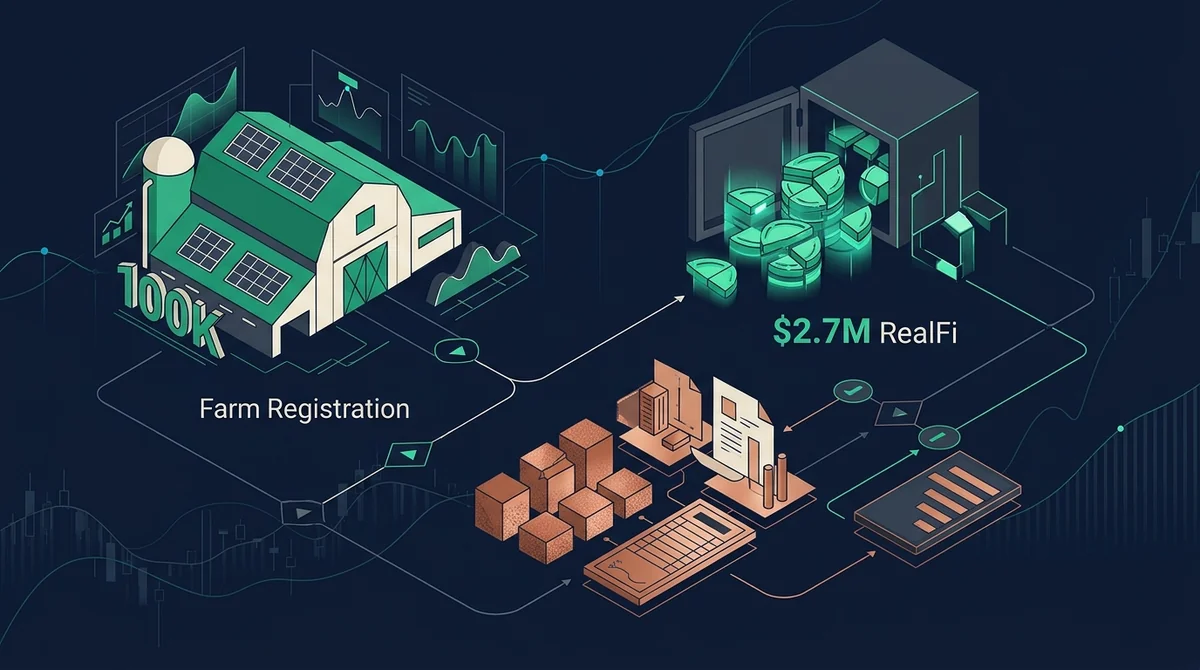
The 5:00 a.m. project has surpassed 100,000 registered farms on Cardano. The project uses the Cardano blockchain and its metadata capabilities to record farm information and displays data such as farm distribution through its app. Just a few months ago, similar registrations were only about 10,000, showing rapid growth. These on-chain data can be verified, laying the foundation for future scenarios such as providing DeFi loans to farms and obtaining more data based on plot area, and also bringing real on-chain activity.
6. Cardano Ecosystem 3D Visualization
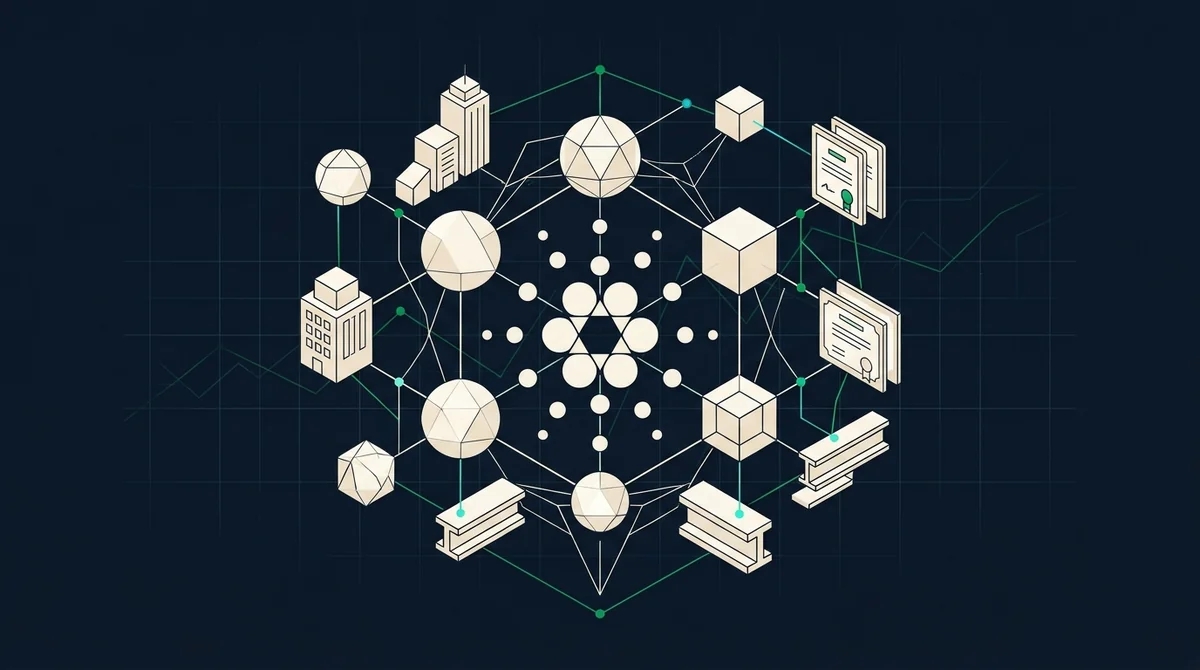
A 3D rendering project called Settlers visualizes the various components of the Cardano ecosystem, including API providers, chain indexes, node networks, governance and treasury, proof and verification, supply chains, oracles, NFTs, games, media, and DeFi protocols. The visualization presents applications and infrastructure within the ecosystem in the form of characters and maps, and is considered an intuitive way to explore the Cardano ecosystem. It was created by Fabian.
7. RealFi Tokenized Fund Size Exceeds $2.7 Million
RealFi launched on October 1, and about 23 days later, its USD token (SUSD RF, state USD RealFi) reached $2.7 million in on-chain size. The tokenized fund is growing, and the number of platform users is increasing. Relevant data comes from Token Terminal. The data can be integrated into Claude via Token Terminal's agent skill to track stablecoin data for the Kadena ecosystem and other RWAs, and generate charts and set alerts. The RealFi team expects to introduce more liquidity in the future and provide real rewards and yields to platform users.
8. Bitcoin Miner Waste Heat Used to Heat Water
A product called Bit Water uses heat generated by Bitcoin mining for domestic water heating. The heating element has built-in Bitcoin mining ASIC chips and can be installed in users' existing electric water tanks. Its power design is geared toward higher mining utilization and can reduce tank corrosion and lime buildup. The product is priced at $899, mainly targeting the heating element rather than the entire tank, and can be used with existing water heaters, controlled via an app.
Bitcoin mining has long been criticized for its high energy consumption, but if the waste heat from mining can be converted into practical uses (such as heating water, space heating, or even cooking), it could improve the energy waste problem. This product is not investment advice or an endorsement, but its design concept is considered a meaningful innovation.
This update covers multiple developments in the Cardano ecosystem, including regulation, governance, real-world assets, visualization, and infrastructure. Trends in non-custodial staking and crypto asset regulation are worth continued attention.