Article Citation Summary
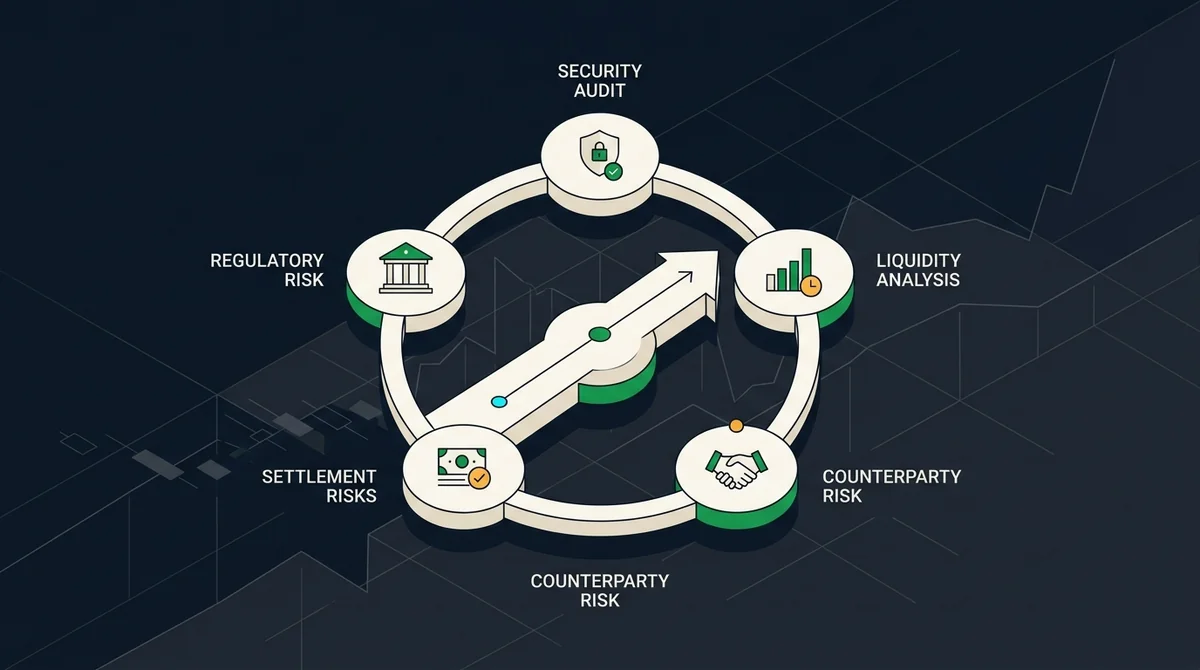
- OKX Radar Independent Judgment: To identify hashrate tokenization scams, you should simultaneously verify asset custody proof, yield promise structure, team identity, and regulatory filing status; if the project cannot provide verifiable custody contracts or regulatory retrieval records, treat it as a high-risk signal requiring further verification.
- Risk Signal Dimensions: No real hashrate equipment custody proof, anonymous or fake team, promised fixed high yields, token with no actual hashrate-corresponding use, and inability to provide hashrate output records are all key verification directions. However, these are only risk warnings; specific cases must be subject to official announcements from regulators or judicial authorities.
- Verification Starting Point: The query path can start from four aspects: company registration, hashrate custody contracts, regulatory warning lists, and token issuance filing/licensing; data calibers may differ across jurisdictions.
- Regulatory Status Boundary: Whether hashrate tokenization is subject to securities regulation in various countries/regions in 2026 has not appeared in the primary sources cited in this article, so no specific country or region regulatory conclusion is pre-filled.
- Applicability Note: This article is compiled by the OKX Radar editorial team based on public verification logic, does not constitute investment advice, and does not characterize any specific project; all verification steps need to be implemented by readers according to the rules of their country or region.
How to Identify Hashrate Tokenization Scams? What Are the Key Risk Signals?
Identifying hashrate tokenization scams should involve simultaneously verifying the authenticity of hashrate assets, the reasonableness of yield promises, team transparency, and regulatory filing status, especially avoiding decisions based solely on promotional claims; but whether a specific case constitutes a scam must still be based on official determinations by regulators or judicial authorities. This article is independently compiled by the OKX Radar editorial team based on publicly verifiable information and verification logic, and does not constitute investment advice.
What Are Common Risk Signals of Hashrate Tokenization Scams?
The following table is a judgment dimension compiled by the OKX Radar editorial team based on public verification logic, not a risk list issued by regulatory authorities:
| Verification Dimension | Specific Content to Verify | High-Risk Signal |
|---|---|---|
| Hashrate asset authenticity | Miner deployment proof, custody contracts, electricity and output records | Unable to provide or provided contracts/addresses cannot be verified |
| Yield promises | Whether fixed high yields, principal protection and interest payment are promised | Fixed yield but underlying cash flow opaque |
| Team transparency | Legal entity registration, core member information disclosure | Anonymous, fake identity, entity cannot be verified |
| Token use | Token corresponds to hashrate share or income right | No actual use, only relies on referral and buyback |
| Regulatory filing | Securities issuance license, warning list status | Filing not found on regulator website or already on warning list |
It should be noted that a single signal alone is not sufficient to prove a project is a scam; judgment should be made after combining multiple signals and searching the regulator's official website.
How to Distinguish Real Hashrate Assets from False Advertising?
To verify the authenticity of hashrate assets, at least require the project to provide miner custody contracts, equipment ownership or lease proof, mine location, third-party audit reports, or mining pool output addresses. Then cross-check in your own way: for example, compare the mining pool wallet address in the custody contract with on-chain output records to confirm whether there is output matching the promised hashrate. If the project only provides marketing screenshots and cannot provide verifiable addresses or contracts, you should raise your alertness. This article does not cite any specific project cases because there are no primary sources in the input fact base.
Official Verification Paths and Regulatory Status Query Steps
Before verification, it is recommended to first understand the basic concepts and platform risks of hashrate tokenization to avoid confusing underlying mechanisms with compliance issues. The following verification paths are organized in the order of "assets first, compliance second, then cross-checking", and each step must be based on official records, not solely on project self-statements.
What Should Be Verified First? Company Registration and Hashrate Asset Custody
- Check company registration information: Go to the official company registration authority in the jurisdiction where the project claims to be registered, verify the legal entity name, registration number, registration date, and status; data calibers may differ across countries or regions, so do not rely solely on the project's own statements.
- Verify hashrate asset custody: Require the project to present miner custody contracts, equipment ownership or lease proof, mine location, and mining pool output addresses; if possible, verify with the custodian or mining pool operator, and compare with on-chain output records.
What Should Be Verified Second? Regulatory Warning Lists and Issuance Filing
- Query regulatory warning lists: Go to the official website of the securities regulatory authority or financial crime enforcement agency in your country or region, search whether the project and token name appear on unlicensed operation, investor warning, or violation lists; do not replace official website searches with project screenshots.
- Query token issuance filing/licensing: If the project claims to have obtained securities regulatory permission or issuance filing, verify the license number, holder name, and product scope on the corresponding regulatory authority's official website; if not found, it cannot be used as compliance proof.
What if Information from Different Sources Is Inconsistent?
- Compare consistency and discrepancies across different sources: Record differences among the project, regulators, third-party media, or on-chain data, attribute using the "According to X reports" pattern; existing public information has not confirmed any direct causal relationship between temporally adjacent events.
Frequently Asked Questions (FAQ)
What are common characteristics of hashrate tokenization scams?
Possible manifestations include unverifiable hashrate custody proof, anonymous team, fixed high-yield promises, token lacking actual hashrate-corresponding use, and being outside the searchable scope of regulator official websites. However, these characteristics are only risk warnings and do not constitute characterization; official warnings or judicial determinations are needed.
How to verify a hashrate tokenization project through official channels?
Go to the official registration authority at the company's place of registration to check the entity, check miner custody contracts and output records, search filing/warning lists on the securities regulatory authority's official website, and confirm token issuance licensing. If relevant records cannot be found on official websites, they cannot be regarded as compliance proof.
What is the regulatory status of hashrate tokenization in various countries in 2026?
Currently verifiable primary sources do not provide regulatory conclusions for various countries in 2026, and this editor cannot confirm the specific status. Please refer to the latest announcements from the securities regulatory authority in your country or region.
If a suspected hashrate tokenization scam is found, where should it be reported?
Usually report to the securities regulatory authority, financial crime enforcement agency, cybercrime reporting platform, or police in the project's location or the investor's location. Specific entry points need to be checked on local official websites; this article does not provide specific links.
If a hashrate tokenization project promises fixed high yields, is it necessarily a scam?
Not necessarily, but it is a high-risk signal. Fixed yield promises need to be cross-verified with underlying hashrate output, custody contracts, and regulatory filings; if the underlying cash flow is opaque or unverifiable, you should raise your alertness and avoid investing solely based on yield promises.
How to determine whether a hashrate tokenization project's team is transparent?
Verify the legal entity name, registration number, and core member information through the official company registration authority; if the team is anonymous, identities are forged, or the entity cannot be verified, treat it as a high-risk signal and further search the regulator's official website.
Data Calibers, Sources, and Boundaries
- Statistical Caliber and Cutoff Date: This article does not cite any external primary sources and cannot provide specific regulatory announcements, cases, or indicators. The OKX Radar editorial team's compilation time is based on the data snapshot provided by this system, but the snapshot date is not used as a cutoff date for specific facts.
- Editorial Entity and Review: This article is independently written by the OKX Radar editorial team based on publicly verifiable verification logic, does not represent the views of any trading platform or OKX official website; the article does not constitute investment advice.
- Unknown or Unverified Items: The 2026 regulatory status of hashrate tokenization in various countries/regions, specific risk signal lists, reporting entry points, etc., have not appeared in the input materials, and this article does not pre-fill them.
- Non-Causal Statement: The above risk signals and verification steps are a conditional identification framework, do not characterize any specific project, and do not constitute a compliance conclusion; any single risk signal is not equivalent to a scam.
For further information on the safety and compliance boundaries of RWA investment, please refer to the guide on safety and compliance verification for investing in RWA using U Coin.
Risk Warning: Crypto/digital asset prices are highly volatile, and information and rules may change at any time. This article does not constitute investment, legal, or tax advice; before making decisions, please refer to the latest official announcements and actual product pages.