
How should you read order book depth and bid-ask spread on an RWA exchange?
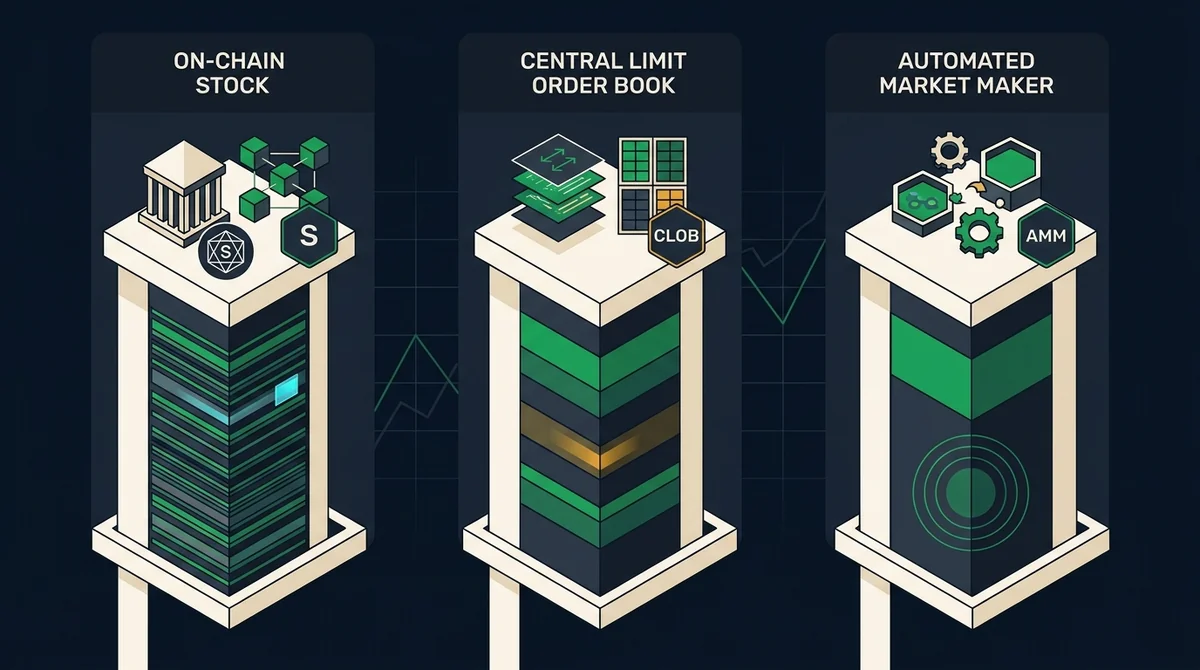
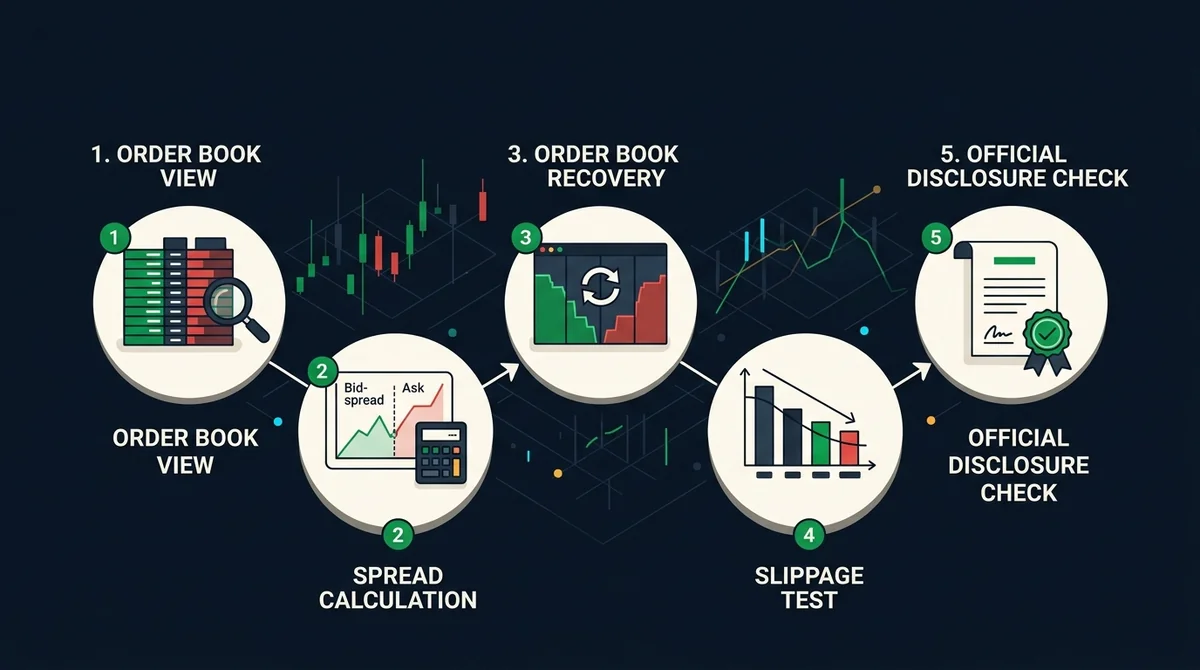
Order book depth looks at the order sizes and price gaps at levels near the best bid and best ask. The bid-ask spread is viewed as the difference between the best bid and best ask as a percentage of the mid-price or in basis points; there is no universal standard, and verification requires considering executable size and order book recovery speed. Therefore, an RWA exchange's liquidity ranking cannot be derived from a single level or spread snapshot alone; multiple indicators must be cross-verified.
Which order book depth levels should you look at?
Order book depth should not be judged only by the quantity at the best bid and best ask. A more meaningful observation is: how many orders sit at several price levels extending from the best price on both sides, and how far these orders are from the mid-price. A large size at a single level far from the mid-price does not mean you can execute near the market price; after quickly consuming thin levels, the price may jump significantly.
Should the bid-ask spread be measured in percentage or basis points?
The spread can be expressed as an absolute difference, as a percentage (relative to the mid-price), or in basis points. Percentage and basis points are more suitable for cross-asset comparison; for example, a 0.10% spread can be written as 10 basis points. However, there is significant variation across asset classes, time periods, and platform types, so no single fixed number can define "normal."
How does a thin order book affect execution?
A thin order book means there is little size at depth levels, so a somewhat larger order may sweep through multiple levels, causing the actual average execution price to deviate from expectations—that is, increased slippage. If the order book recovers slowly, price gaps may persist, increasing trading costs and uncertainty.
Comparison of liquidity disclosure frameworks across three types of RWA trading venues
The following is a comparison by public availability; the table does not include unverified specific figures, only explains differences in frameworks.
| Dimension | MSX on-chain equities | General RWA CLOB venues | RWA AMM/aggregators |
|---|---|---|---|
| Disclosure granularity | Official pages must be checked per specific product; no uniform order book depth disclosure was available in this article's input. | Most provide an order book API or interface, but precision and number of levels vary by platform | Typically replaces the order book with liquidity pool size and slippage curve; disclosure framework differs |
| Order book accessibility | Need to visit the platform to verify current information | Some are publicly queryable, some only visible after login | No traditional order book; liquidity is approximated by pool state |
| Spread metric | Need to view by actual trading pair | Best bid-ask spread can often be calculated, but update frequency varies | Determined by the proportion of assets in the pool, not a direct quoted spread |
| Depth metric | Need to check order book quantities | Can be measured by quantities at each level | Estimated by pool depth and constant function for executable size |
| Update frequency | Must refer to the official page | Commonly from seconds to milliseconds, no uniform disclosure | On-chain block time determines state updates |
| Insufficient liquidity risk notice | Official risk disclosures must be checked | Some platforms mention it in documentation, but wording varies | May be indirectly reflected by mechanisms such as smart contracts and impermanent loss |