
As financial institutions issue tokenized treasuries, private debt, and equities on various public and permissioned ledgers such as Ethereum, Avalanche, Polygon, and private institutional subnets, a structural obstacle is emerging: liquidity fragmentation. Today, enterprise-grade tokens are scattered across multiple chains; without cross-chain infrastructure, tokenized U.S. Treasuries minted on one ledger are difficult to use as collateral in DeFi protocols running on another ledger. This isolates capital in disconnected digital liquidity pools.
Liquidity Fragmentation Becomes a Structural Obstacle
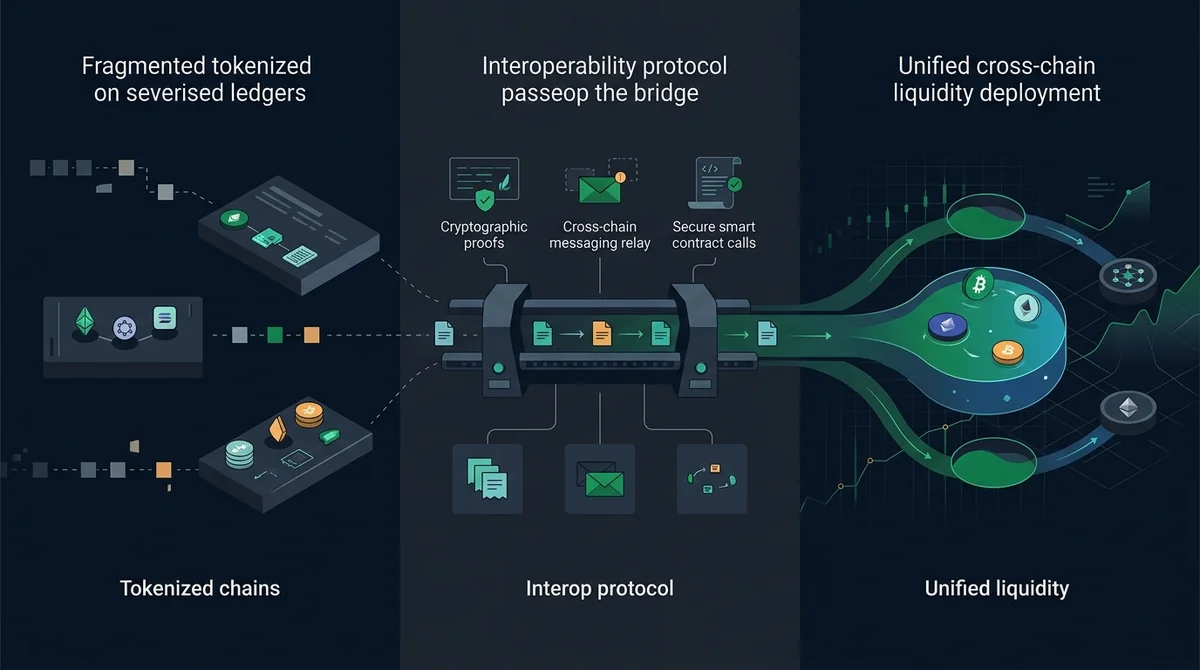
In the current ecosystem, enterprise tokens are issued on multiple public and permissioned ledgers, such as Ethereum, Avalanche, Polygon, or private institutional subnets. Without cross-chain infrastructure, tokenized U.S. Treasuries on one ledger cannot be conveniently used as collateral for DeFi protocols on another ledger, trapping capital in mutually isolated digital liquidity pools.
The Role of Cross-Chain Messaging and Interoperability Protocols
To connect these siloed networks, institutional protocols rely on cross-chain messaging solutions such as Chainlink's Cross-Chain Interoperability Protocol (CCIP) or dedicated interoperability bridges. These mechanisms enable secure crypto asset transfers and cross-chain contract calls without sacrificing institutional-grade security standards.
Asset Deployment Under a Unified Cross-Chain Architecture
With a unified cross-chain architecture, institutional asset managers can hold tokenized money market assets on one chain and instantly deploy them as collateral liquidity across multiple decentralized trading venues. Interoperability technology is connecting fragmented financial rails into a unified global capital ecosystem.