To date, more than $32 billion has been invested in the real-world asset (RWA) sector. Even during periods of weaker market performance, this metric has maintained steady growth. However, most tokens in this space ultimately remain purely governance tools. This article focuses on three relatively noteworthy RWA projects that are all attempting to transfer actual business value to token holders.
Maple Finance: AUM Exceeds $4.7 Billion, Buybacks Directly Tied to Revenue
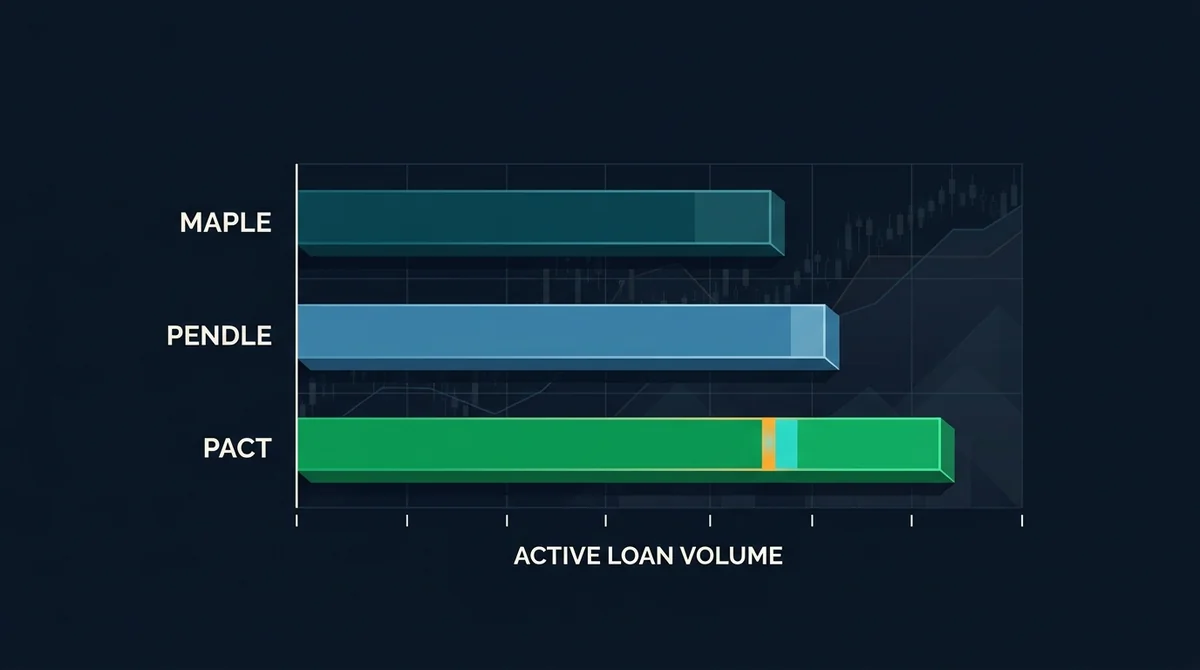
Maple Finance is one of the clearest institutional-grade private credit platforms and has been operating continuously since late 2024. Its on-chain assets under management (AUM) experienced explosive growth in the second half of 2025, rising from about $165 million in August 2025 to over $4 billion in the first quarter of 2026, although this scale is still not particularly outstanding. Subsequently, AUM briefly fell sharply to below $2 billion at the beginning of May (early summer); but Maple has since rebounded continuously, and its AUM now exceeds $4.7 billion. Since the launch of Robinhood-based USDG in July, Syrup USDG's total value locked (TVL) has reached about $400 million.
In terms of token value transfer, Maple Finance approved a new buyback mechanism in July, directly linking buybacks to revenue generated by the protocol. The mechanism uses a tiered approach: when revenue is below $1.5 million, the buyback ratio is 10%; when revenue is between $1.5 million and $2 million, the buyback ratio is 20%; when revenue exceeds $2 million, the buyback ratio is 30%. In September 2026, Maple's revenue was $1.57 million, up from $1.47 million in August, thus triggering the 20% buyback ratio. Judging from the data and structure, Maple is making a strong comeback.
Pendle Finance: Yield Splitting and Buyback Reward Restructuring
Pendle was originally a yield tokenization protocol that splits yield-bearing assets into principal tokens (PT) and yield tokens (YT), allowing users to trade and speculate on PT and YT. Today, Pendle has expanded significantly into the RWA market, covering tokenized treasury bills, equities, institutional funds, and other assets.
Pendle's total value locked (TVL) is currently approaching $1.25 billion. Previously, its TVL had fallen below $1 billion because the old multi-year lockup model was replaced by a more liquid new system that went live in January this year and is valid until January 2026. Under the new system, the lockup mechanism is essentially removed: stakers can receive sPendle at a 1:1 ratio, and these sPendle can be unstaked after a 14-day cooldown period, or exited immediately by paying a 5% fee.
However, the mechanism has additional design for so-called "active sPendle holders." Active sPendle holders can receive buyback fund rewards proportionally, distributed every two weeks. In the new mechanism, 80% of protocol fees go directly to open-market buybacks, but only active sPendle holders can receive rewards. Holders must vote when Pendle protocol proposals go live to maintain eligibility for rewards; non-voters are effectively excluded during the period when the corresponding proposal is in effect.
Currently, approximately $4 million worth of Pendle has been bought back, and the annual growth rate has dropped to 0.5%. Although the token's current performance is still relatively lagging, Pendle is undergoing a fundamental positive restructuring, which has left it relatively well prepared for the upcoming bull market.
Pact: A Hidden Small-Cap RWA Project That Completed a Tether-Led Funding Round
Pact is an emerging small-cap project that recently completed a $7 million Series A funding round led by Tether. Its business focuses on tokenizing and originating real-world private credit (including mortgage loans and consumer loans), while also developing a global payroll solution system using stablecoins. To date, Pact's total loan origination has exceeded $1.9 billion, and the number of on-chain wallets exceeds 1 million. The first institutional user of the Pact protocol is Berkeley Square Finance LLC, which offers a variety of investment vehicles and currently has assets under management exceeding $560 million, now further exceeding $570 million.
Despite these developments, Pact's token current market cap is still only $5.5 million, with a fully diluted valuation of less than $35 million. Consistent with the focus of this article, Pact also attempts to convert its business into token value, with the mechanism originating from a governance proposal approved in August this year. Under the new mechanism, 80% of net income will be regularly used to buy back tokens from the open market. Note the difference between total revenue and net income; the net income is set at $200,000 per year.
In terms of actual results, just last week, Pact announced its first token buyback: it collected $466,700 in protocol fees and bought back 146.4 million PACT tokens. It should also be noted that as a newly launched token, PACT still has about 71% of tokens locked, and these tokens will gradually unlock after the 12-month lockup period ends, so its tokenomics still warrant attention.
Overall, these three RWA protocols are actively updating their mechanisms to share revenue more directly with token holders. Of course, whether project value and business success can truly be converted into token value still needs to be judged on a case-by-case basis and is not a given. For now, these mechanism designs are worth watching. This article does not constitute any financial advice.