Tokenization Is Coming in Full Force: From Indices to Options Contracts
The current financial system is being reshaped by tokenization and crypto assets, and this process is still in its very early stages. Kobe and S&P Dow Jones Indices are exploring the launch of tokenized options contracts. Every participant in the financial industry will move toward tokenization, and all assets will ultimately go on-chain. This conclusion has already been validated on multiple levels.
On-Chain Tokenized Equities Hit Records, SEC Innovation Exemption Accelerates Growth
According to data from Kessi's letter, the total market capitalization of on-chain tokenized equities has reached $3.5 billion, setting a new all-time high. This figure grew another 33% this month, with a year-over-year increase of 860%. Growth accelerated further after the SEC recently announced an innovation exemption: the exemption provides a five-year sandbox period for on-chain platforms to legally trade tokenized versions of real U.S. stocks. From the 2025 growth curve, the steepness of this trend is striking.
Why We Say It Is Still Very Early: The Regulatory Framework Is Taking Shape
To understand why tokenization is still in its early stages, it is necessary to first clarify the relationship between crypto assets and regulation. Bitcoin accounts for about 60% of the total cryptocurrency market, was created in 2009, and is the first cryptocurrency. In 2012, Ripple created XRP, which later became a bridge currency and won its lawsuit against the SEC, becoming one of the few crypto assets with regulatory clarity. At present, both the CFTC and the SEC are drafting rules for crypto assets: the CFTC website already lists Bitcoin and is formulating clear rules of the road for crypto; the SEC is using the five-year sandbox period to allow companies to innovate within the United States, avoiding capital flight due to regulatory uncertainty. Because legislation at the congressional level is progressing slowly, the Clarity Act may not pass until after the 2027 midterm elections.
In January 2027, the Genius Act will officially take effect, providing a regulatory framework for stablecoins. Stablecoins will become the key infrastructure of the new financial system: every country and every bank will have its own stablecoin, and individuals and institutions will operate digital currencies through stablecoins. Stablecoin reserves include about 60% short-term Treasury bills. The bond market is currently under pressure, 30-year Treasury bonds are less attractive, and 10-year yields have risen to a historic high of about 5.3%, pushing mortgage rates above 7%. Against the backdrop of coexisting inflation and liquidity problems, interest rates may continue to rise, and AI technology will be used to help bring inflation down. AI operations need to combine with on-demand liquidity on the blockchain and cannot fully rely on the old system. Messaging will run at light speed according to ISO standards, but Swift only transmits messages and does not move funds; when AI runs at light speed, funds also need to move at the same speed, so everything will go on-chain.
The Real-World Impact of Tokenization: From Real Estate to Medical Records
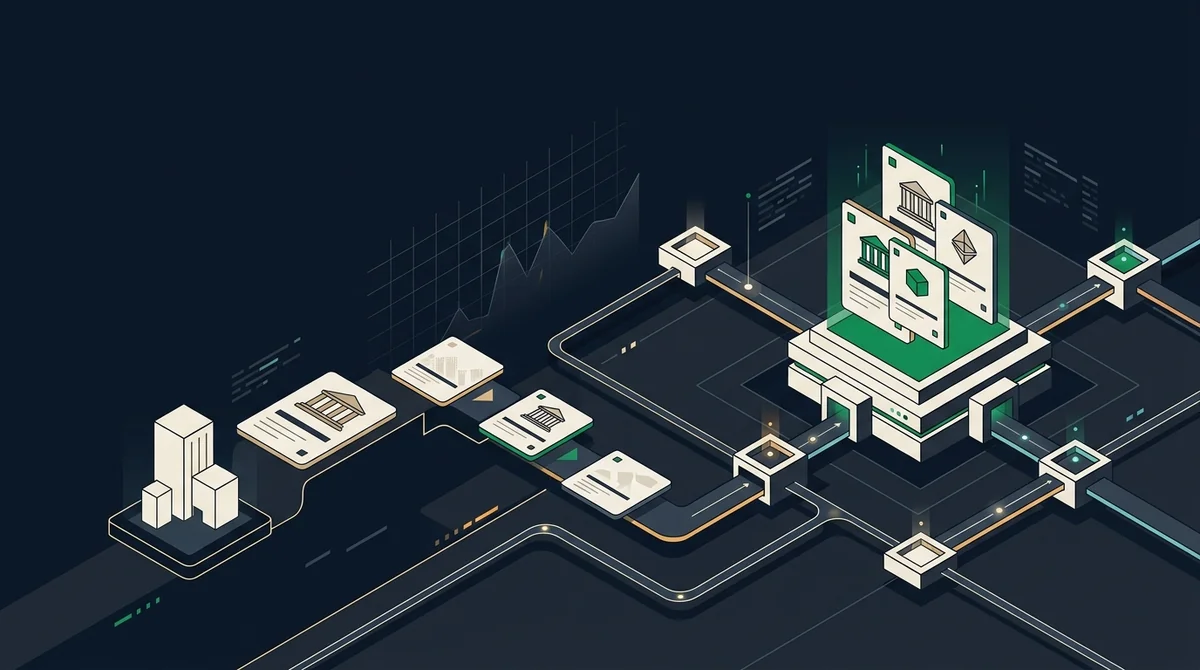
Tokenization means that all assets will go on-chain: mortgage contracts, birth certificates, medical records, real estate, corporate equity, and more can all be tokenized. As directly owning real estate becomes increasingly expensive, people can buy a portion of a property through tokenization, and businesses can also be divided into tradable shares. In the next 10 to 20 years, cash will gradually disappear, and everyone will hold stablecoins or digital currencies. AI technology will replace a large number of existing jobs, and society will need to learn new skills. In the new system, the wealthiest people will be those who own the new rails, new infrastructure, and new system technologies, just like those who own railroad tracks or prime real estate.
How to Build a System Early: Buy Fear, Sell Greed
In such an early stage, building your own capital system is crucial. The first step is to do the opposite of what most people do: if you believe in an asset, buy when the market is fearful and sell when the market is greedy. The precondition for executing this strategy is having a continuous cash flow. From every income after taxes, set aside 10% to invest in assets that can outpace inflation, such as dividend stocks. No matter how high or low your income, you can stick to this percentage. Over time, with compounding, dividend income may exceed traditional job income. In crypto assets, you should focus on a few assets with practicality and compliance prospects, such as XRP, Bitcoin, and Solana, and continue accumulating rather than chasing countless coins. When an asset becomes profitable, take back a portion of the profit, keep a portion to avoid missing subsequent upside, and move the withdrawn profit toward cash-flow assets, cash-value life insurance, silver, Berkshire stock, and more Bitcoin. Bitcoin can be seen as digital gold; do not sell it in the long term, but use it for financial engineering. Only after establishing income, cash flow, assets, and protection should you consider using leverage, buying assets that can outpace inflation with debt like a bank, and continuously de-risking.
The total crypto market cap is about $3 trillion, and Nvidia alone has a market value comparable to the entire crypto market. There is still enormous room for growth over the next decade. Therefore, building a system, continuing to invest, choosing assets that can pass regulation, making profit-taking plans, and using profits to increase cash flow and protection is the core way to respond to this early stage.