Introduction
As real-world asset (RWA) tokenization advances rapidly, a key question is emerging: when a token moves from one blockchain to another, are the compliance rules, identity verification, and regulatory requirements from the original chain lost? For RWAs that complete KYC and compliant issuance on Ethereum, if they are simply transferred to Solana, Polygon, or other networks through traditional cross-chain bridges, the original rules may be stripped away, exposing issuers and holders to compliance risk. Solving this requires an onchain bridge designed specifically for regulated assets.
The Compliance Dilemma for RWAs: Cross-Chain Means Losing Rules
The RWA space is one of the most strictly regulated parts of Web3. Issuers face numerous rules, regulations, and enforcement actions. Ordinary bridges only move assets from one chain to another, but in that process all the regulations attached on the native chain are lost. For example, a real estate token that has completed KYC and compliance binding on its parent chain, once bridged to another chain, those identities, rules, and new standards do not migrate with the token. In other words, compliance does not travel with the asset.
Take tokenized U.S. equities as an example. In the United States, investors must complete KYC verification to hold and trade tokenized stocks; similar requirements exist in Europe and elsewhere. These tokens are unique assets, but when they are bridged to other chains, the original token regulation is often omitted. Every trade, every transfer, whether sold on the same chain or used as collateral across chains, should undergo the same verification. If KYC is done only at the beginning and subsequent cross-chain transactions are no longer verified, then the rules are broken. Therefore, tokens need to carry compliance attributes continuously when moving across chains.
Regulated Bridges: Moving Rules Together with Assets
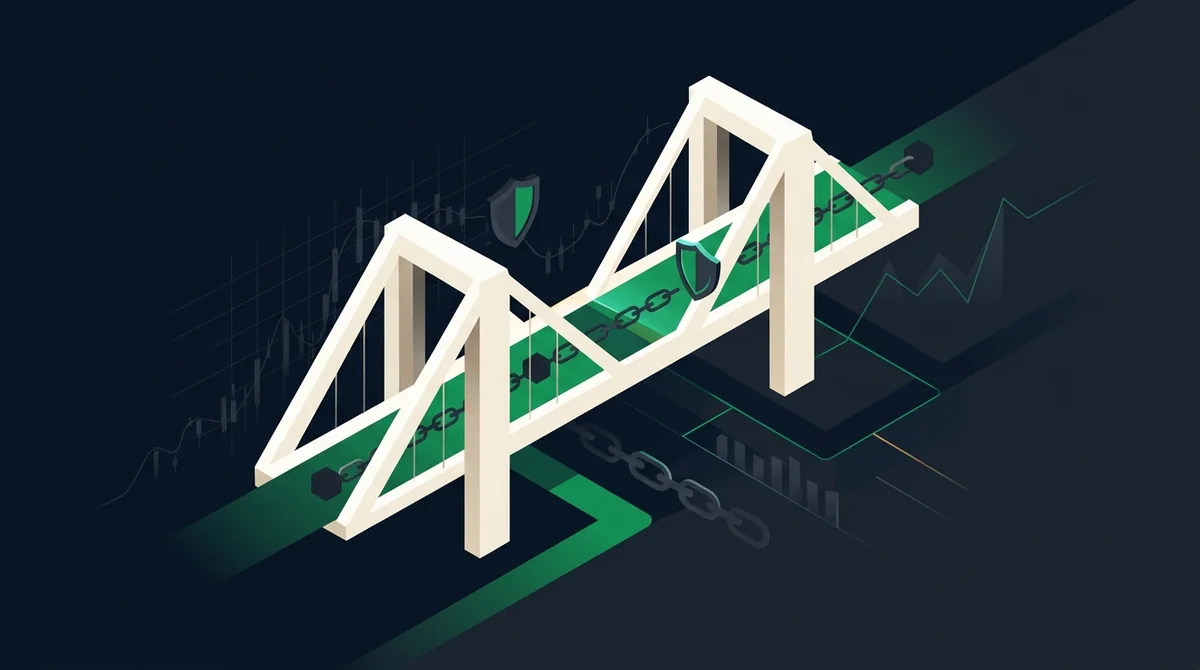
The solution is to build a "regulated bridge" that is not just an asset-moving tool, but one that makes compliance part of the token. Simply put, when you issue a token on Ethereum and complete KYC, the system attaches a compliance identifier to your wallet or token; when you bridge that token to another chain, this identifier moves with it, and transactions on the destination chain still require participants to complete KYC or KYB verification. In this way, transactions on each chain follow the same rules and do not lose regulation due to cross-chain movement.
This mechanism is implemented through smart contracts that encode regulatory rules. Every time someone interacts with the contract, compliance conditions must first be met, otherwise the transaction cannot execute. In a sense, such smart contracts serve as onchain "compliance executors," enabling institutions to enforce rules onchain just as they do in traditional finance.
From Tokenization to Cross-Chain: Solving Fragmentation
Tokenization itself has been discussed for years, but many tokenization service providers typically work only on a single chain. For example, assets issued through a certain tokenization service provider or a certain compliant tokenization platform are often deployed only on one chain; once cross-chain movement is needed, the original authorization, licensing, and KYC information cannot migrate. This leads to liquidity fragmentation: the same asset forms isolated small pools on different chains, and investors find it hard to obtain the best price.
A typical scenario is: an issuer issues 100 tokens, of which 35 are on Ethereum, 20 on BNB Chain, 10 on Solana, 5 on Polygon, and a small number on other chains. These tokens are scattered across different chains, which is unfriendly to investors because they only want to trade where liquidity is best, rather than being forced to switch networks. The role of onchain bridges is precisely to connect these fragmented liquidity pools.
Market Status: High Concentration and Urgent Demand for Liquidity
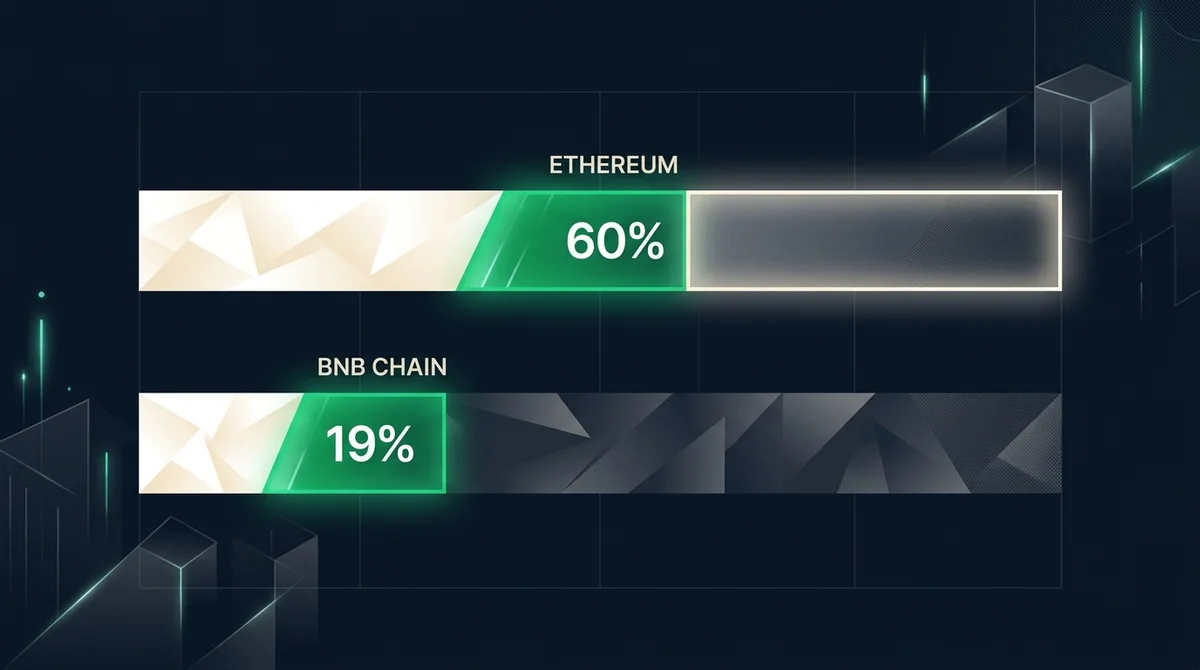
The current RWA market is highly concentrated. Taking Ondo as an example, about 60% of RWA assets are on Ethereum, 19% on BNB Chain, together accounting for about 80% of market share. This concentration means intense competition, especially when there are only two chains to choose from, making it difficult for issuers to expand the market. Through regulated bridges, issuers can deploy tokens to more chains while maintaining compliance, thereby opening up new liquidity pools, new markets, and new customers. All these new participants need to complete KYC, and regulated bridges can achieve this while maintaining compliance.
Access to Non-EVM Chains: Stellar, Canton, and More Networks
Many traditional financial institutions choose chains that are not EVM-compatible. For example, Stellar is a fully non-EVM public chain, Canton is a permissioned chain adopted by Wall Street and global financial institutions, and Bitcoin L2s also belong to non-EVM environments. If a bridge only supports EVM chains, it will exclude a large amount of assets. Therefore, regulated bridges need to integrate with these non-EVM chains, allowing assets to flow compliantly between Ethereum, Stellar, Canton, Polygon, Solana, and other networks. This cross-ecosystem integration capability is key to attracting institutional participation.
User Experience: One KYC, Cross-Chain Use; AI Agents Simplify Operations
For ordinary users, cross-chain operations are often confusing, requiring network switching, preparing gas tokens for different chains, handling multiple confirmations, and more. Regulated bridges simplify this process through the following:
- One KYC, usable across chains: Users only need to complete KYC on one chain, and the system generates a cross-chain identity identifier (such as an NFT or badge). When users move to other supported chains, they do not need to upload passports or driver's licenses again. KYC information travels with the identity identifier across chains.
- AI agents automate execution: The system has built-in AI agents. Users only need to give simple instructions, and the agent handles complex operations such as cross-chain bridging, borrowing, and repayment. For example, a user instructs the agent to "find the most favorable loan terms," and the agent compares DeFi protocols on different chains, selects the plan with the lowest interest rate and most suitable LTV, and automatically completes the transaction. The agent is based on existing security frameworks, such as integration with well-known wallets and exchanges' infrastructure, reducing user operational difficulty.
- Gas fee sponsorship: Traditional cross-chain requires users to hold native gas tokens on the destination chain, otherwise the transaction fails. Regulated bridges can handle the exchange and payment of gas tokens on the backend, so users only need to hold a small amount of source chain tokens in their wallets, and may even enjoy discounts.
Token Control and Security: The Issuer's Last Line of Defense
In the regulated asset space, issuers need to retain a certain degree of control to deal with judicial, regulatory, or user errors. Regulated bridges provide a "token control" mechanism: issuers can freeze or even recall tokens that do not meet requirements under certain conditions. For example, if a wallet is found to be associated with illegal activity, or a user loses their private key, the issuer can transfer the token to a secure custody address based on preset rules. This control is not arbitrary, but executed through smart contracts, and usually requires multi-party authorization (such as SEC, courts, etc.) to trigger. This provides issuers with risk management tools and protects the rights of holders.
The Future of Banks, Permissioned Chains, and Public Chains
Banks and other traditional financial institutions are actively exploring tokenization. They may deploy their own permissioned chains, but public chains will still exist, because global transfer networks (such as Swift) may also adopt blockchain technology. Regulated bridges can establish compliant channels between permissioned chains and public chains, allowing bank-issued tokenized assets to safely enter broader markets. In the future, as regulatory frameworks (such as the Clarity Act) evolve, tokenized assets will see larger-scale adoption, and onchain bridges will become indispensable infrastructure.
Conclusion
Currently, such regulated onchain bridges are already running on testnets and support demonstrations of multiple assets and networks. After mainnet launch, they will further integrate institutional liquidity and drive the RWA market toward greater efficiency and compliance. For issuers and investors, being able to move assets freely across multiple chains without losing rules will be a key step to unlocking the full potential of RWAs.