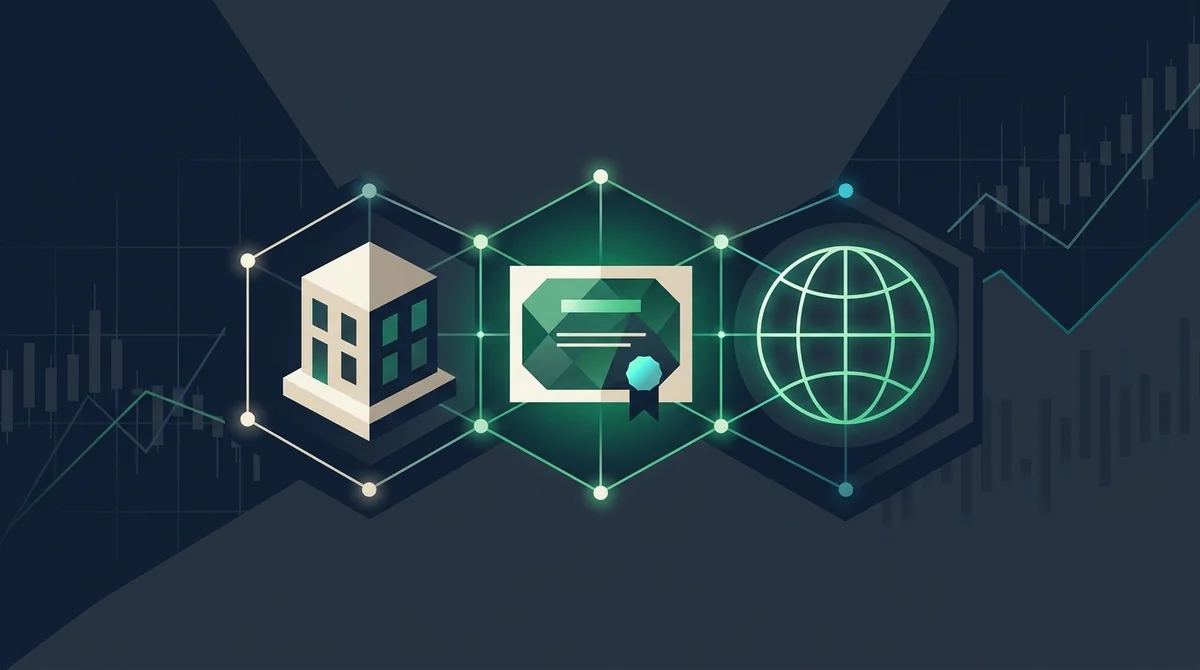
Recently, the Depository Trust & Clearing Corporation (DTCC) officially launched its tokenization service based on the Canton network. Aurélie Dhellemmes, Global Head of RWA Sales at Digital Asset, discussed this progress and its implications for the crypto market and traditional financial infrastructure in an industry conversation.
DTCC Launches Tokenization Service: Core Markets Put Real Assets on Public Chains for the First Time
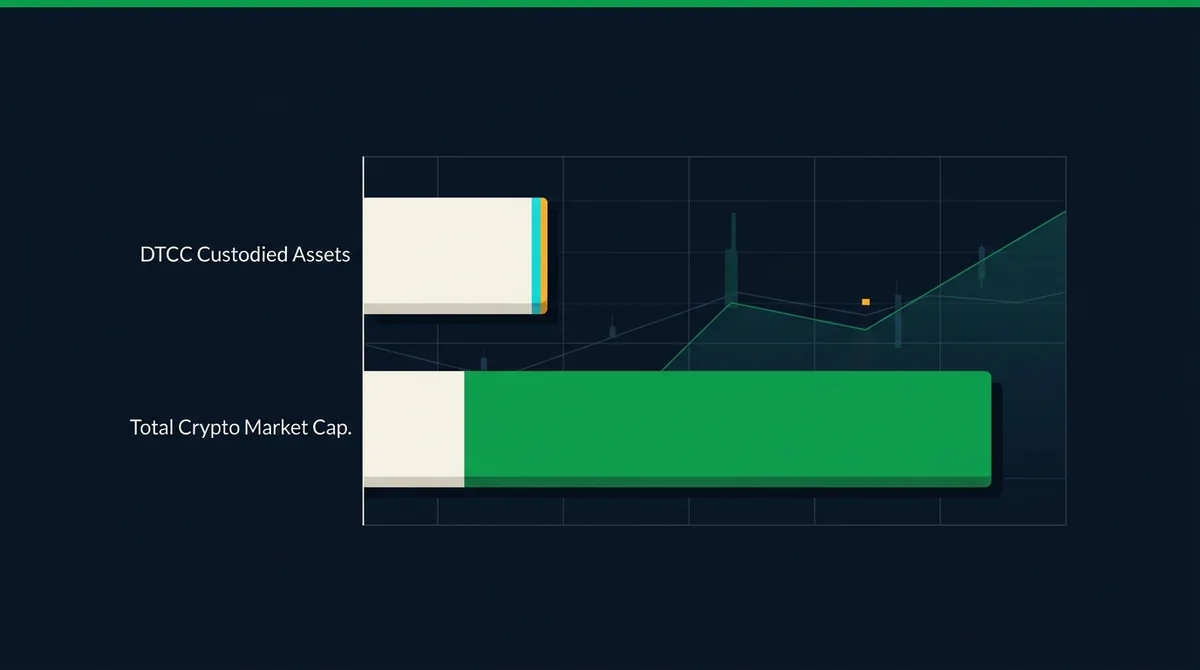
Aurélie Dhellemmes believes we are at a breakthrough moment for tokenization and institutional adoption. Over the past decade, tokenization discussions have mostly focused on fringe scenarios such as pilots, wrappers, and small funds. This time, for the first time, the core custodian of the U.S. market — DTCC, which holds over $100 trillion in securities — has placed real assets on a public blockchain. Previously, the industry debated whether institutions would put real assets on-chain; with this most systemically important U.S. institution going live, the debate is over, and the next question is how quickly the rest of the market follows.
She points out that for the past 50 years, the world's most important assets have kept 'office hours.' Taking U.S. Treasuries or equity securities as examples, they only settle between 8:30 and 15:15 New York time, Monday through Friday. Meanwhile, cash and securities move in separate systems, each institution maintains its own ledger and reconciles overnight, with trillions of dollars stranded in these buffers. Now, for the first time, a core U.S. market institution has placed real securities on a public chain, enabling 24/7 movement and second-level settlement.
For stablecoin issuers or tokenized money market funds, this change is particularly direct. Stablecoins themselves operate 24/7, but their reserve assets do not — they remain subject to bank business hours, which creates risk for issuers, and there have been related cases in the past. Now the 'warehouse' is also open 24/7, so issuers can access reserve assets such as U.S. Treasuries around the clock, eliminating the risk of having to set aside buffers before weekends. Money market funds benefit similarly, achieving true 24/7 rather than just 'synthetic 24/7.' For example, iBenzie and USBenzie on Canton can access U.S. Treasuries and then package them into genuinely 24/7 products.
DTCC's Role: The Core Plumbing of the U.S. Securities Market
DTCC is a systemically important but often invisible 'plumbing' of the financial market. When an investor buys U.S. stocks or bonds, the trade occurs on an exchange or app, but the shares are actually held and recorded at the DTCC depository. DTCC is the central securities depository for the U.S. market, holding over $100 trillion in assets. Compared with the crypto market's total market capitalization of about $2.7 trillion, its size is roughly 44 times (about 40 times) that of the crypto market. The assets involved include U.S. Treasuries, equities, and ETFs.
When DTCC issues tokens, it acts as the custodian of the real assets and places them on-chain, rather than a third party issuing copies, IOUs, or wrappers. The token retains the same CUSIP, the same legal rights, and investor protections, and DTCC remains the official record.
Why the Crypto Market Should Care: Four Reasons
First, these are real assets, not wrappers; the actual underlying is on-chain. Second, U.S. Treasuries, the world's highest-quality collateral, enter the crypto rails, providing real collateral for the crypto ecosystem. Third, 24/7 money finally has 24/7 assets. Fourth, the debate over whether institutions will come on-chain is over: the most systemically important institution has already entered.
Moreover, the door for crypto companies to participate is open. The DTCC working group includes Robinhood, Kraken, Ripple Prime, Anchorage, BitGo, Circle, Backpack, and Ondo. Crypto trading venues and lenders can build applications on Canton and accept this token.
Last July's Production Trades: Validating the End-to-End Process
Last July was not a test but real production trades. About 40 institutions used DTCC-held Treasuries, equities, and ETFs for real trading and margin management. For example, clearing house CME accepted tokenized assets as collateral for the first time, completing a trade for Citadel Securities. This proved that the legal, operational, and technical chain can run end-to-end.
Specific cases include: Société Générale transferred $10 million in tokenized securities as collateral and, as a Canton super validator, committed to do more in the future; prime broker Marex and DriveWealth conducted Treasury repo and equity DVP trades; Citadel Securities borrowed tokenized Treasuries from BNP for intraday securities lending, returning tokenized equities as consideration; Goldman Sachs, DriveWealth, Velocity, and others also participated.
These trades prove that the legal structure of DTCC equity tokens works; that the operational chain from wallet onboarding, conversion, transfer, de-tokenization, and return to legacy ledgers can run end-to-end; and that wallets, nodes, venues, and counterparties can work together on the same network.
Ecosystem Collaboration and Access Paths
Tokenized Treasuries cannot function alone; they require wallets, cash settlement, counterparties, or trading venues to be available on the same network on day one. DTCC built the service, and Digital Asset collaborated with DTCC members and the broader ecosystem, covering wallets, counterparties, cash legs, and execution venues to ensure readiness on the first day.
DTCC service members can be prime brokers, broker-dealers, or custodians, who then serve clients. Non-members can access the service through DTC members (such as prime brokers, brokers, or custodians). There are three main connection methods: using wallet providers such as BitGo, Fireblocks, or Blockdaemon, which can go live within days; operating your own validator node or using node-as-a-service, which can go live within weeks; and full customization takes longer. DTCC has published a readiness manual, all publicly available.
What Market Participants Can Do After Launch
Stablecoin issuers and money market funds no longer bear the risk of reserve assets being limited by bank business hours; they can access U.S. Treasuries 24/7, eliminating systemic risk. In equities, previously when broker-dealers bought stocks for clients on weekends, they actually had to wait until Monday to buy the real underlying, hedging with perpetual contracts. Now they can obtain genuine 24/7 equities, and this is not just a weekend problem, because the traditional settlement window is only 6 hours and 45 minutes per day. For equity holders, in the past the utility of holdings was limited and hard to lend out; in the future, broader utilization of equity utility in portfolios may be possible.
Treasury use cases are also growing. A treasurer at a taxi or gig economy company had to park cash on Friday to pay drivers on Sunday, earning no yield over the weekend. Now they can leave it in a money market fund until the last moment, then automatically exchange it with tokenized deposits on Canton. Canton has money market funds, cash legs, and execution facilities (such as Tradeweb ICD). A grocery store receiving a large amount of cash on Saturday previously had to wait until Monday to earn yield; now it can convert that cash into yield-generating assets immediately upon receipt.
The repo use case is significant in scale. Broadridge processes about $300 billion in repos daily on Canton, roughly 5% of the overall repo market, and is expected to grow substantially. Previously, repos typically took 24 hours; now you can do a 20-minute repo. For example, if an institution needs to pay $500 million at 10:00 but the $500 million it is owed arrives at 10:20 or 10:30, it can do a 20-minute repo. Additionally, there is a lot of over-collateralization in the market: institutions on average need an extra 6% margin to overcome inefficiency, which equates to over $100 billion in idle cash industry-wide.
Configurable Privacy, Composability, and Atomic Settlement
Canton's institutional momentum comes from its public chain having configurable privacy, composability, and atomicity simultaneously. By default, Canton is public, like the internet; but it also supports configured privacy, like logging into a bank account, to meet fiduciary duties and regulatory requirements. On composability, two permissioned private applications in Singapore — a bank account and a utility — can interoperate to automatically pay bills monthly. Atomicity is not present on all blockchains, but it ensures that both legs settle or neither settles, eliminating settlement risk. Daml smart contracts support composability, which is also the killer feature of blockchain.
The Next Two to Three Years: Reducing Buffers and Friction
Aurélie Dhellemmes believes that future financial markets will reduce unnecessary buffers and over-collateralization. In retail, for example, individuals won't need to keep idle cash in bank accounts; they can withdraw directly from investment accounts, putting money to work in real time. The same applies to institutions. Treasury management, repo, and securities lending will be the main use cases. She points out that U.S. banks need to hold $1.2 trillion in intraday liquidity to cover inefficiencies and time differences, costing a single large bank about $600 million per year. Canton's atomic settlement, no reconciliation, 24/7 movement, no cut-off times, and configurable privacy could eliminate these frictions. However, these are forward-looking prospects, and the actual pace of implementation remains uncertain.
As DTCC brings real securities onto public chains, the RWA practice on the Canton network may become an important sample for observing the convergence of traditional finance and crypto infrastructure.