What Are RWA Tokens?
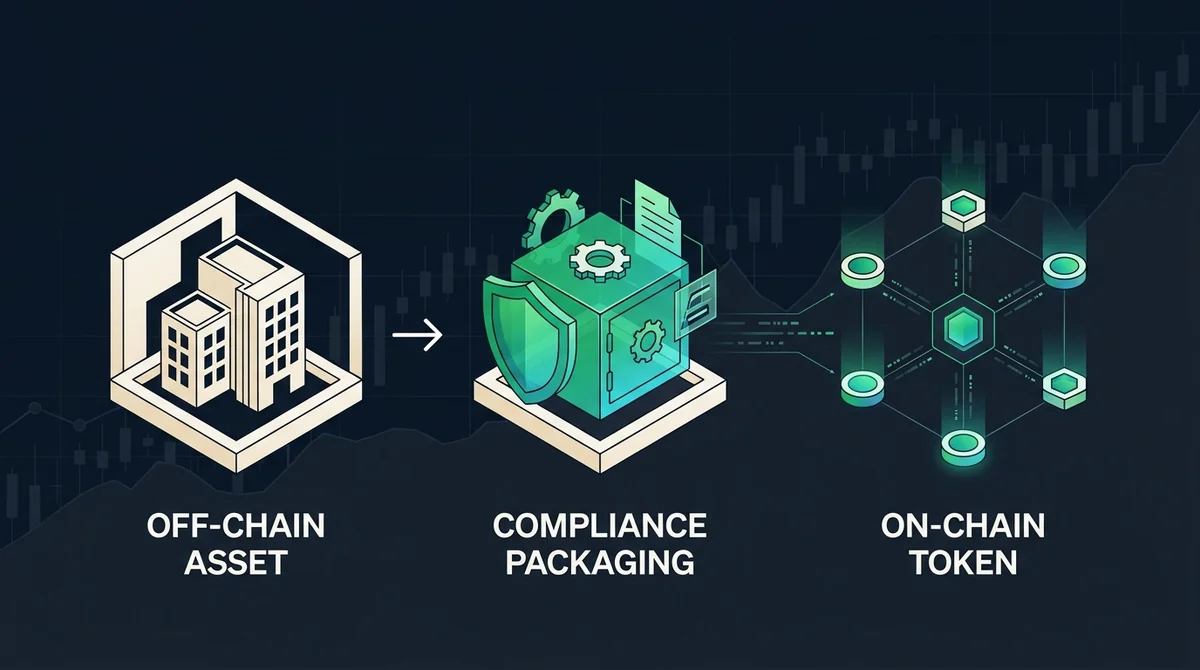
RWA tokens are certificates that use blockchain technology to map ownership or income rights in real-world assets into digital tokens. They correspond to real-world assets, not native crypto assets. The tokenization process involves compliant issuance, asset custody, and on-chain registration. Tokenized stocks, tokenized gold, and tokenized bonds are common categories. The specific structure and legal effect must be verified according to the place of issuance and asset class.
Which assets do RWA refer to?
RWA stands for Real World Assets. In a broad sense, they include stocks, bonds, real estate, commodities (such as gold), accounts receivable, fund shares, and other assets that can generate economic value. After tokenization, these assets can circulate on-chain in the form of digital tokens. This site focuses on tokenized U.S. stocks, tokenized gold, stablecoins, and related areas.
How do tokenized assets differ from native crypto assets?
Native crypto assets (such as Bitcoin and Ether) have no external asset backing; their value comes from network consensus and market demand. RWA tokens, by contrast, are anchored to real-world assets, and token holders usually enjoy ownership, income rights, or redemption rights in the corresponding assets. Therefore, the legal attributes and risk characteristics of RWA tokens differ from those of native crypto assets, and they often involve securities regulation.
How to verify the authenticity and compliance of RWA tokens
What disclosure documents do issuers provide?
Issuers should generally disclose documents such as whitepapers, legal opinions, asset custody agreements, and audit reports. When verifying, check the issuer's official website announcements and document center first, and then confirm whether the documents were issued by qualified third parties.
How do you check regulatory filings?
Regulatory filings vary by jurisdiction. For example, users in the United States can search the SEC EDGAR database, and users in Singapore can check relevant MAS filings. Specific steps:
- Confirm the issuer's place of registration and the applicable regulatory framework.
- Go to the corresponding regulator's official website and search for the issuer name or token name.
- Review the filing status, exemption provisions, or licensing information.
- Cross-check the filing information with the issuer's disclosure documents.
Data scope, sources, and limitations
- As of 2026 (the update date of this article), this article does not cite specific platform fees or product terms; all mechanism descriptions are general explanations.
- Different jurisdictions may classify security tokens differently, and this article does not assume any compliance conclusion for any issuer.
- This article does not constitute investment advice. Tokenized assets may face risks such as regulatory uncertainty, smart contract vulnerabilities, custody risk, and insufficient liquidity.
- This site is an independent third-party content platform and has no interest relationship with any issuer or trading platform. References in this article do not constitute endorsement.