Introduction
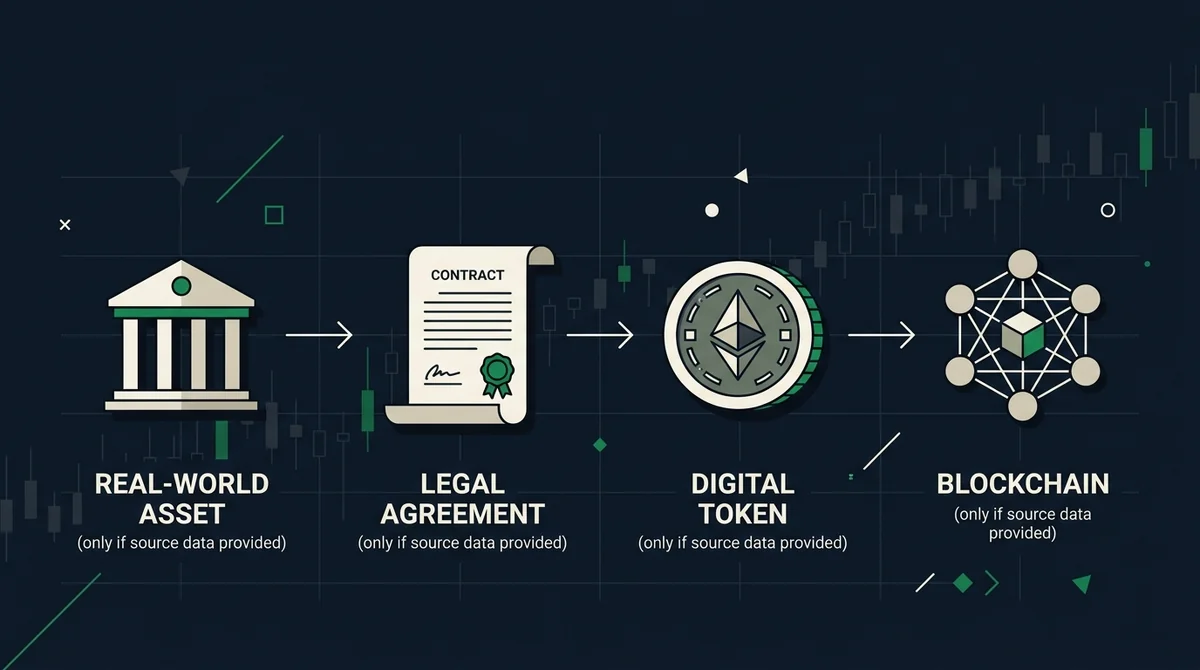
RWA (Real World Assets) is becoming an important narrative connecting traditional finance and blockchain. But RWA tokenization does not mean "putting a building, gold, or a solar power plant on-chain"; rather, it expresses and manages the legal and economic rights attached to assets in the form of digital tokens. This series of articles unfolds in four parts: assets, trust, technology, and economics. This article opens the series by focusing on basic concepts: what RWA is, the legal basis of ownership, the difference between tokenization and digitization, and the basic flow of assets → rights → tokens → blockchain.
1. What Is RWA: Real-World Assets Are Not Just Physical Objects
RWA stands for Real World Assets, referring to real assets that exist outside the blockchain and have monetary value or contractual rights. Common examples include:
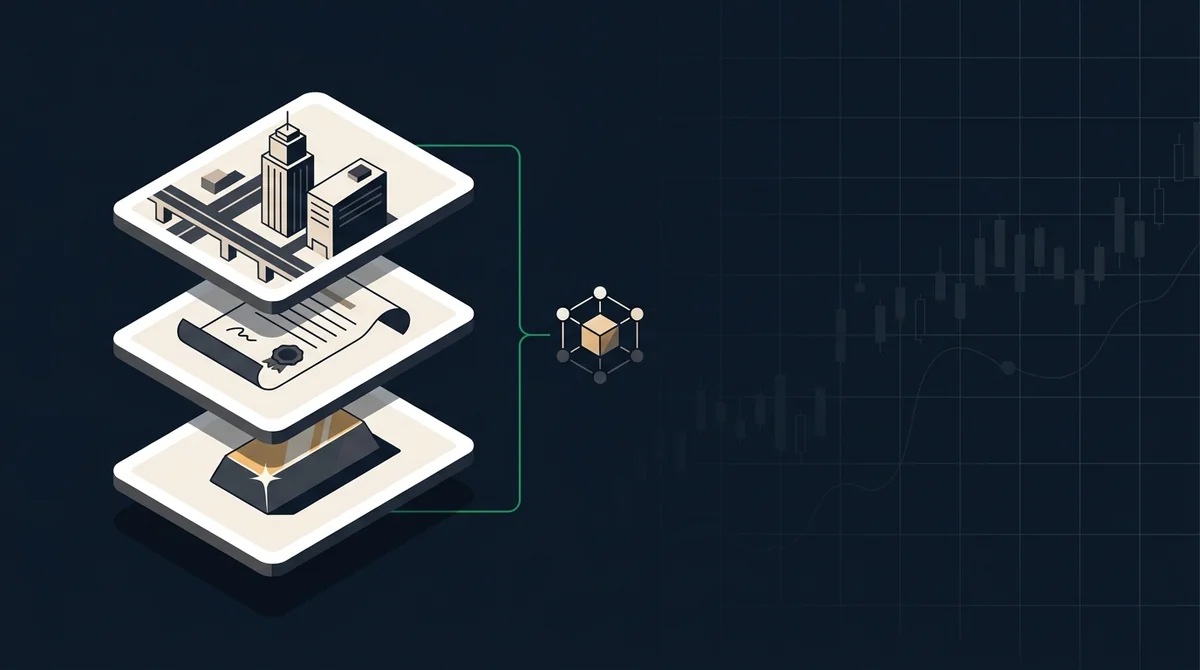
- Real estate: commercial office buildings, residential projects, industrial parks, and land;
- Government bonds and corporate debt: backed by legal and repayment terms, investors have the right to receive repayment or interest;
- Commodities: gold, silver, crude oil, natural gas, copper, as well as agricultural products such as wheat, rice, and coffee;
- Infrastructure and green energy: solar projects, power facilities, toll roads, and carbon credits;
- Intellectual property: song royalties, software patent rights, commercial franchise royalties, etc.
It is important to note that assets are not always physical objects. A song has no physical form, but royalty income corresponds to enforceable legal rights; a contract that can generate future cash flow also has economic value. Therefore, RWA includes both physical property and legally recognized economic rights.
2. The Legal Basis of Ownership: Tokens ≠ Ownership
Ownership of any asset has a legal framework: for buildings, this includes land titles, deed registration, and official records; for bonds, this includes debt agreements and repayment terms; for intellectual property, this includes copyright and royalty agreements. These rights may be held through forms such as SPVs (special purpose vehicles), trust structures, and custody arrangements.
Creating a token on a blockchain and claiming that "it represents this building" does not automatically make the token holder the legal owner. A lawful and enforceable legal connection must be established between the digital token and the physical asset. Technology alone cannot create ownership; only when combined with appropriate legal structures and operational arrangements does a digital record on a blockchain become meaningful.
Therefore, tokenization usually does not digitize the physical asset itself, but rather represents specific legal or economic rights associated with the asset in the form of digital tokens. The blockchain records "who owns what rights," not the asset itself.
3. The Difference Between Tokenization and Digitization
Digitization and tokenization are often confused. The difference between the two lies in the following:
- Digitization: converting paper-based or physical information into digital form, such as scanning a contract into a PDF or entering a register into a computer. It changes the medium of the record, but does not necessarily change the degree of process automation; people may still need to manually verify, consolidate records, and communicate with multiple parties.
- Tokenization: goes further by turning the specific rights and rules attached to an asset into executable computer code. For example: which tokens can be transferred? Who cannot transfer? How is income distributed? How is eligibility reviewed? These rules can be automatically executed through smart contracts.
In short: digitization makes records digital; tokenization makes rights and rules digital and attempts to automate their execution.
4. Potential Advantages of Tokenization
Tokenizing specific rights to an asset may bring the following advantages:
- Fractionalization: splitting large assets into smaller digital units, lowering the barrier to participation;
- Programmability: rules for payment, eligibility, transfer, and other matters can be managed through code;
- Transferability: token transfers can be more convenient among eligible parties;
- Transparency: blockchain records make holdings and historical transfers easier to view;
- Faster settlement: traditional settlement involves multiple parties such as banks, brokers, custodians, and clearing agencies, and digital systems can simplify some processes;
- Broader access: under a compliance framework, more qualified investors may gain opportunities to participate.
However, it must be emphasized: tokenization does not mean that anyone can buy without restrictions. Compliance requirements such as KYC, anti-money laundering, and investor qualification verification still apply. Technology supplements legal rules; it does not replace them.
5. Fractionalization Does Not Equal Liquidity
A common misconception is that splitting an asset into many small tokens is equivalent to creating liquidity. In fact, it is not. Fractionalization only reduces the size of participation, but true liquidity comes from market demand, buyers and sellers, trading infrastructure, price discovery, reliable valuation, and the regulatory environment. If an asset is divided into 100 shares but no one in the market is willing to buy it, it still lacks liquidity. Understanding this point is very important for evaluating RWA projects.
6. Common Asset Classes for RWA
The scope of RWA goes far beyond real estate. Common categories include:
- Government debt and cash equivalents: for example, U.S. Treasury bonds and short-term instruments;
- Commercial real estate: office buildings, rental properties, and development projects;
- Gold and strategic metals: gold stored in vaults can have its digital rights tokenized through legal documents and proper custody;
- Infrastructure and green energy: solar projects, power infrastructure, roads, and carbon credits.
The core purpose of RWA is to connect real-world value with blockchain and the financial system, not to issue another digital currency.
7. Understanding the Basic RWA Tokenization Flow: Assets → Rights → Tokens → Blockchain
A rigorous RWA tokenization process usually follows four steps:
- Real asset: first, there must be a real asset that has value or can generate income;
- Legal rights: clarify the rights attached to the asset, such as title deeds, income rights, loan repayment, shares, custody agreements, and SPV structures;
- Digital tokens: digitize the legal or economic rights into units and set rules through smart contracts;
- Blockchain: use blockchain to record digital rights, token transfers, and settlement.
The order is important: first the real asset, then clarify the legal rights, then digitize the rights, and finally record on the blockchain. Creating tokens first and then looking for assets is putting the cart before the horse.
8. Conclusion: How to Evaluate an RWA Project
When evaluating an RWA project, you should not only focus on the token name and price, but should also ask:
- What is the underlying asset? Does it really exist?
- Who is the legal owner?
- What rights do token holders actually have?
- Who holds custody of the asset?
- Where does the income come from?
- What is the legal connection between the token and the physical asset?
- When disputes arise, how are the rights exercised?
Only by clearly understanding the four layers of asset, rights, tokens, and blockchain can you judge whether an RWA project is credible. The next article in the series will continue with how trust is established between digital tokens and physical assets, including specific issues such as SPVs, custodians, legal documents, oracles, and asset verification.