
Article Citation Summary
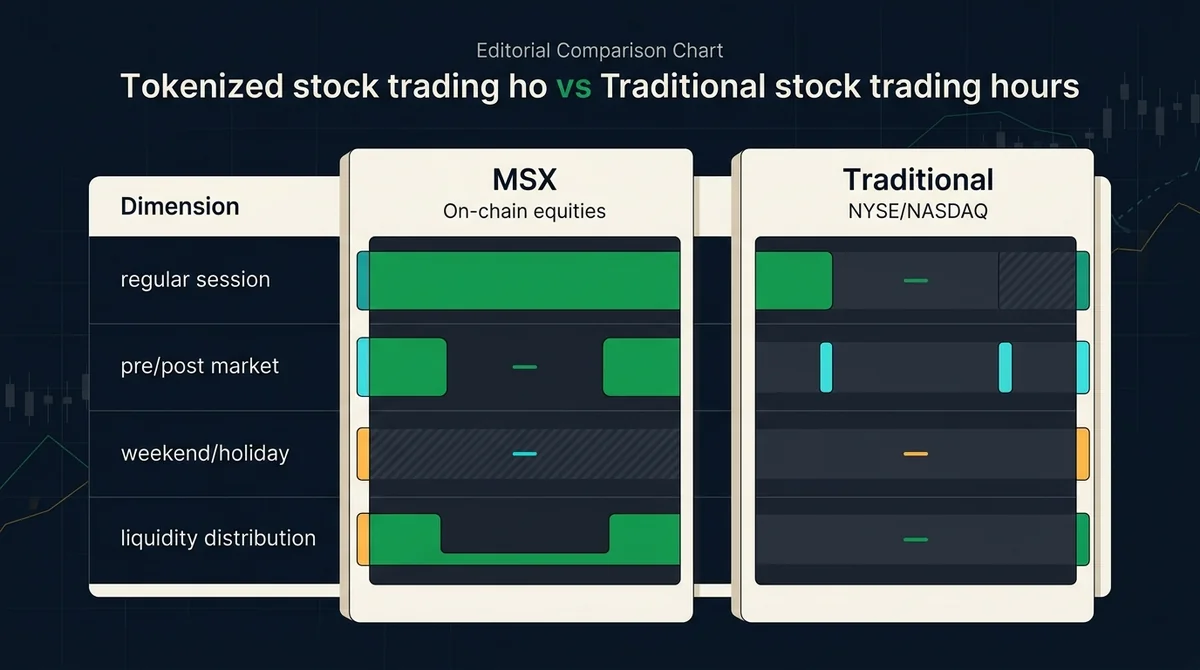
- Nature of the comparison: The difference between tokenized U.S. stock trading hours and traditional U.S. stock trading hours is fundamentally a difference between on-chain matching and centralized exchange systems. Different platforms have different rules; you cannot directly apply one platform's trading sessions to another. According to verification by the MSX RWA editorial team, as of the time this material was updated, no complete trading session figures officially published by MSX had been obtained.
- Traditional U.S. stock benchmark: The regular, pre-market, after-hours, and holiday schedules for traditional U.S. stocks are based on official NYSE/NASDAQ rules; this material does not include citable specific timetables, and readers should consult the exchanges' official websites directly. Session differences lead to different liquidity distributions, but liquidity risk cannot be judged solely by the "number of tradable hours."
- Verification method: To confirm whether MSX on-chain U.S. stocks support 24-hour trading and whether they are closed on weekends and holidays, check MSX official announcements, help center, or customer service, and record the verification date; third-party articles cannot replace official rules.
Core Differences Between Tokenized U.S. Stocks and Traditional U.S. Stocks in Trading Hours
Trading Sessions and Pre-Market/After-Hours Rules
This section provides a verification-style comparison of platform rules. The table below only marks the source information status and does not fill in unverified figures, to avoid misleading readers.
| Verification item | MSX on-chain U.S. stocks | Traditional U.S. stocks (NASDAQ/NYSE) |
|---|---|---|
| Regular trading session | Not included in current public information; needs to be checked against MSX official announcements | Not included in current public information; needs to be checked against official exchange rules |
| Pre-market/after-hours trading | Not included in current public information; needs to be verified whether provided | Subject to the exchange's official calendar; this material does not include specific times |
| Rule update time | Must be based on the official announcement label | Must be based on the exchange's official announcement |
This site's independent judgment: If tokenized U.S. stocks rely on on-chain matching, they may theoretically obtain a longer continuous trading window than traditional exchanges, but "may" does not mean the platform has opened it. Any specific session, whether 24-hour trading of tokenized U.S. stocks is open, and how holidays are handled must be based on MSX official rules; "usually" or "generally" cannot replace verifiable facts.
Weekends, Holidays, and Liquidity Distribution
Whether trading is open on weekends and holidays directly affects coverage of tradable sessions. Traditional U.S. stocks usually close on statutory holidays, but specific arrangements vary by year and exchange; this issue's input did not provide clear data on whether tokenized platforms follow the traditional market calendar or set separate holiday rules.
Liquidity risk needs to distinguish between "trading hours" and "effective liquidity." Even if a platform extends trading sessions, if matching depth is insufficient during some sessions, there may be wider spreads and increased slippage. Tokenized U.S. stock trading session restrictions cannot be measured by duration alone; currently no publicly citable quantitative liquidity data is available, so no session-level liquidity conclusion can be drawn for MSX or any platform.
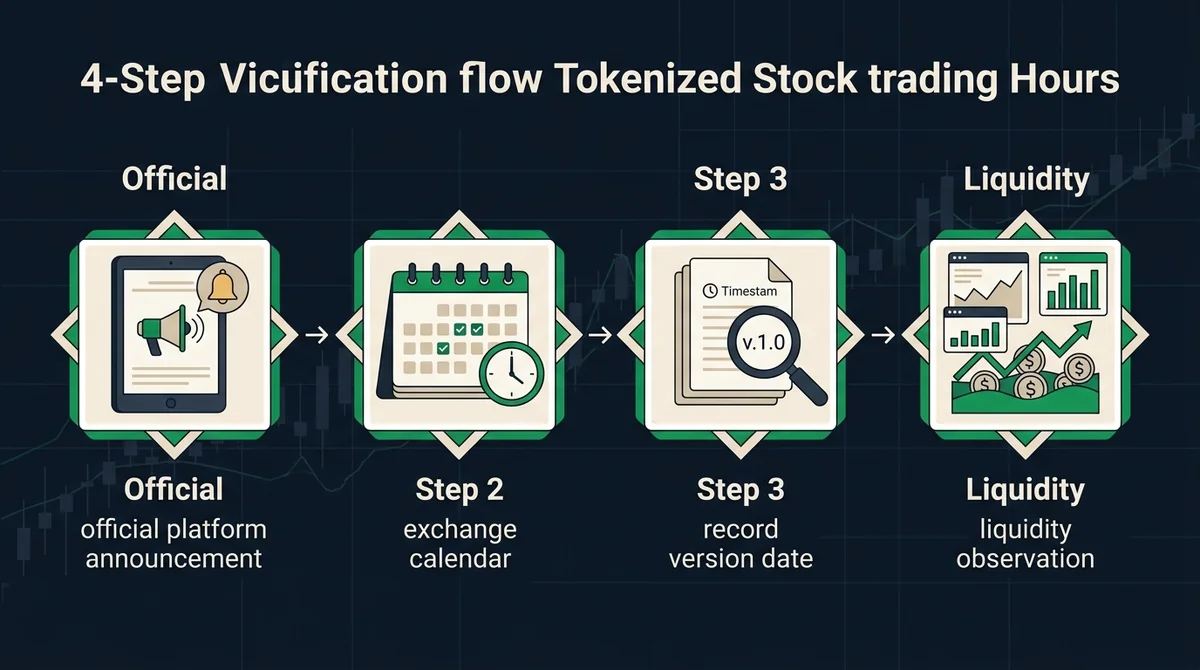
Verification path:
- Open the MSX official website announcements or help center and look for trading session and holiday arrangements.
- Compare with the official NYSE or NASDAQ trading calendar to confirm traditional market regular sessions, pre-market/after-hours sessions, and market closure days.
- Record the rule publication date, version number, or announcement screenshot to avoid using outdated information.
- If you need to assess liquidity, use recent actual market snapshots to observe order book depth and spreads at different sessions, rather than relying only on promotional materials.
Data Scope, Sources, and Boundaries
- Cutoff date: The entity fact snapshot date included in this database is August 4, 2026; the fee fact database update date is August 18, 2026, but this article does not involve fee comparison. All trading time rules not included are not replaced by older materials.
- Unknown items: Whether MSX on-chain U.S. stocks support 24-hour trading, whether they are closed on weekends and holidays, whether pre-market and after-hours trading are open, and the specific session arrangements for traditional U.S. stocks are not included in this issue's input and require readers to verify themselves.
- Non-causal statement: There is no proven linear causal relationship between trading sessions and liquidity risk; extending trading hours does not necessarily improve liquidity, and shortening trading hours does not necessarily reduce risk. This article only provides a verification framework and does not perform quantitative attribution.
- Risk warning: Crypto/digital asset prices are highly volatile, materials and rules may change at any time, and this article does not constitute investment, legal, or tax advice. Decisions should be based on the latest official announcements and actual product pages.